# GHK-Cu Copper Peptide: Understanding Its Properties and Research Potential
GHK-Cu is a copper-containing peptide that has gained attention in research involving skin biology, connective tissue, regeneration, and the aging process. Also known as a copper peptide, it consists of glycyl-L-histidyl-L-lysine associated with copper and is generally studied for its potential role in several biological pathways.
**What Makes GHK-Cu Interesting?**
GHK-Cu belongs to a group of peptide compounds investigated for their interactions with biological processes involved in tissue maintenance. The presence of copper is particularly relevant because this mineral participates in various enzymatic and cellular functions.
Research interest in GHK-Cu extends across several areas, including collagen and elastin production, skin structure, tissue repair, antioxidant activity, inflammation, and hair-related research. This broad range of potential applications has made copper peptides an increasingly discussed subject in laboratory and cosmetic science.
**GHK-Cu and Collagen Production**
Collagen is one of the main structural proteins found in connective tissue and plays an important role in maintaining the strength and structure of the skin. Elastin, meanwhile, contributes to its flexibility and elasticity.
GHK-Cu is studied for its potential relationship with pathways associated with collagen and elastin. This has made the peptide particularly interesting in research concerning skin firmness, texture, and the biological processes associated with visible aging.
**Research Into Skin Appearance**
Changes in skin appearance are influenced by numerous factors, including age, environmental exposure, oxidative stress, and changes in the extracellular matrix. Researchers have therefore explored compounds that may affect pathways involved in maintaining skin structure.
Copper peptides have attracted attention in this context because of their potential connection with tissue-supporting mechanisms. GHK-Cu research has consequently included areas such as skin regeneration, firmness, texture, and the appearance of age-related changes.
**Tissue Repair and Regeneration**
Another important area of interest is tissue repair. The biological mechanisms involved in repairing damaged tissue are complex and include cellular signaling, extracellular matrix formation, and the production of structural proteins.
GHK-Cu is investigated in relation to these processes, particularly because copper-dependent biological pathways are involved in tissue formation and maintenance. Research into the peptide therefore extends beyond cosmetic applications and includes broader studies of connective tissue and regeneration.
**Antioxidant and Anti-Inflammatory Properties**
Oxidative stress and inflammation are important subjects in cellular and tissue research. Excessive oxidative activity can affect cells, while inflammatory processes can influence tissue function and recovery.
The research surrounding GHK-Cu includes investigation into potential antioxidant and anti-inflammatory activity. These characteristics are part of the reason copper peptides continue to be examined in studies involving skin and connective tissue.
**Potential Applications in Hair Research**
GHK-Cu has also attracted interest in research concerning hair and the surrounding skin. Hair follicles depend on a complex environment involving cells, connective tissue, and signaling pathways.
Studies of copper peptides therefore consider their possible relevance to biological processes associated with hair follicles and tissue structure. However, research interest should not be confused with proof of a specific clinical benefit.
**The 200 mg Research Format**
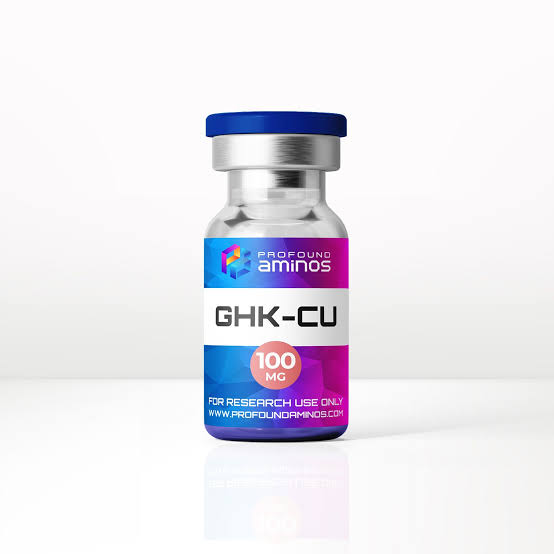
The product described on the referenced page contains 200 mg of lyophilized GHK-Cu in a sealed vial. The kit also includes bacteriostatic water intended for reconstitution.
Lyophilized peptides are supplied in a dry form, which can help with storage and handling before they are prepared for laboratory applications. The product information also emphasizes controlled storage conditions and protection from environmental factors such as excessive heat and light.
**Storage and Handling**
According to the product information, the lyophilized material should be stored in a cool, dry place and protected from light. Following reconstitution, refrigeration at approximately 36–46°F is recommended, while freezing should be avoided.
The material should be gently swirled during dissolution rather than vigorously shaken. Such handling considerations are important when working with peptide preparations because appropriate storage and preparation can help maintain material quality.
**Why Peptide Research Requires Careful Interpretation**
Interest in GHK-Cu has grown because of the number of biological processes associated with copper peptides. Nevertheless, laboratory findings should be interpreted within the appropriate research context.
Evidence involving cell models, experimental systems, or other laboratory settings does not necessarily establish the effectiveness or safety of a compound for human treatment. The appropriate interpretation of GHK-Cu therefore depends on the specific study design, available evidence, and intended research application.
**A Broad Area of Scientific Interest**
One of the notable characteristics of [GHK-CU copper peptide](https://www.ecbt.org/product/ghk-cu-200mg-zphc-copper-peptide/) research is its interdisciplinary nature. The compound appears in discussions involving peptide biology, skin science, connective tissue, regeneration, oxidative stress, inflammation, and hair research.
Rather than being associated with only one biological mechanism, GHK-Cu is examined in relation to multiple pathways that contribute to tissue structure and maintenance. This makes it a useful subject for continued investigation into the relationship between peptides and copper-dependent biological processes.
**Conclusion**
GHK-Cu is a synthetic copper peptide that has become an interesting subject in research focused on skin, connective tissue, collagen, tissue repair, oxidative processes, and hair biology. Its combination of a small peptide structure with copper contributes to its distinctive research profile.
While existing research has generated interest in numerous potential biological functions, GHK-Cu should be considered within the boundaries of scientific research rather than automatically treated as an established medical treatment. Further investigation is needed to better understand its mechanisms, applications, and potential limitations.